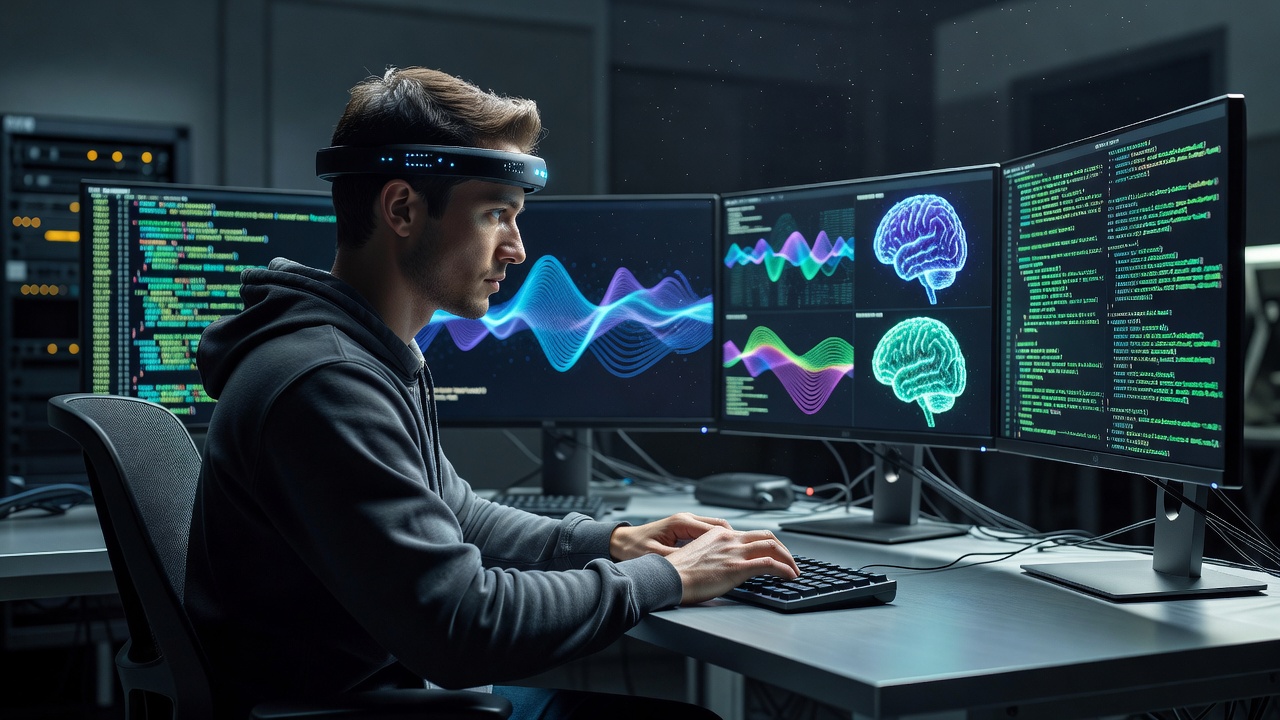
The Quantified Mind
While the first wave of wearables quantified our physical bodies—steps, heart rate, sleep cycles—the next frontier targets cognitive function. Productivity and brain-interface wearables are designed to measure, analyze, and ultimately enhance our mental states. In an era characterized by infinite digital distractions and rising cognitive fatigue, artificial intelligence is being deployed to act as a personal focus architect, helping users maintain flow states and manage stress.
This category of hardware diverges sharply from general-purpose smartwatches. It is highly specialized, encompassing devices ranging from subtle haptic metronomes intended to anchor attention, to complex, non-invasive electroencephalography (EEG) headbands that map brainwave activity in real time.
Haptic Feedback and Nervous System Regulation
A significant segment of focus wearables does not rely on measuring brainwaves, but rather on influencing the autonomic nervous system through tactile stimulation. These devices, often worn on the wrist, chest, or ankle, emit precise, rhythmic vibrations. The underlying principle is rooted in entrainment and vagal nerve stimulation.
By producing a low-frequency pulse, these wearables attempt to guide the user’s biological rhythms—such as heart rate and respiration—into a state of coherence. When paired with an AI companion app, the device learns the user's stress patterns over time. If a paired biometric sensor detects an acute spike in stress (measured via skin conductance or heart rate variability), the wearable can autonomously initiate a calming haptic sequence to ground the user, aiming to prevent cognitive overload before it disrupts productivity.
Non-Invasive Brain-Computer Interfaces (BCIs)
The more ambitious end of this spectrum involves consumer-grade Brain-Computer Interfaces. Unlike surgical implants, these are non-invasive wearable headbands or specialized headphones embedded with EEG sensors. These sensors detect the micro-electrical signals generated by cortical activity.
Measuring Flow and Fatigue
The primary application for these devices is objective focus tracking. Machine learning algorithms analyze the raw EEG data, categorizing brainwave frequencies (Alpha, Beta, Theta, Gamma). By understanding the ratio of these waves, the AI can reliably determine if a user is in a state of deep concentration, relaxed awareness, or acute mental fatigue.
This data translates into practical productivity tools. An AI headband might interface with a computer's operating system to automatically block distracting websites when it detects the user entering a "flow state." Conversely, if the device measures a sustained drop in cognitive resources, it can prompt the user to take a scientifically timed break, optimizing work-rest cycles far more effectively than traditional time-management methods like the Pomodoro technique.
Efficacy vs. Technological Hype
While the promises of neuro-productivity are enticing, it is vital to approach the consumer market with a degree of skepticism. Non-invasive EEG technology is inherently noisy. Thick hair, skull density, and even slight muscular movements (such as jaw clenching or blinking) can introduce significant artifacts into the electrical signal, making accurate real-time analysis extremely difficult for consumer-grade dry electrodes.
Furthermore, the neuroscience of "focus" is incredibly complex and varies wildly between individuals. The AI models driving these devices are trained on generalized datasets, meaning their accuracy may not immediately translate to every specific user. The industry is still bridging the gap between clinical-grade neurological research and reliable, everyday consumer utility.
The Ethical Implications of Cognitive Data
Collecting cognitive data introduces unprecedented privacy considerations. While physical biometric data reveals the state of a body, neural data begins to border on revealing the state of a mind. If employers were to adopt these technologies to monitor workforce productivity, the potential for surveillance overreach is severe. Establishing rigid ethical frameworks regarding who owns this data, how it is encrypted, and ensuring it cannot be used for discriminatory practices is a prerequisite for the widespread adoption of brain-interface wearables.